Fly with Condor to Florence
5 reasons to travel to Florence
Instagrammable Spots in Florence
Fly with Condor to Florence
+
5 Reasons to travel to Florence
+
Instagrammable Spots
+
Fly with Condor to Florence (FLR)
Florence is a city in central Italy and the capital of the Tuscany region, set along the Arno River. It is known for its long-standing role in European art and architecture and remains a major cultural center in Italy. Florence has a Mediterranean climate with hot summers and cooler, often damp winters. Rail connections and its location between Rome and northern Italy make it a practical base for traveling across Tuscany.
☀️ Best time to go: April–June and September–October, mild temperatures and generally comfortable conditions for city travel
🏛️ Best known for: Art, Architecture, Museums, Cuisine, City life
🗣️ Language: Italian
✈️ Airport: Florence Airport, Peretola (FLR)
5 Reasons Why You Should Travel to Florence (FLR)
1. Renaissance art and landmark architecture
Florence is packed with masterpieces in churches, museums and open-air squares. See works at the Uffizi and Galleria dell’Accademia then look up at Brunelleschi’s dome. Even a short stroll feels like a history lesson.
2. Tuscan flavors from markets to trattorias
Food in Florence centers on simple Tuscan ingredients and seasonal cooking. Browse Mercato Centrale for cheeses and cured meats then settle in for ribollita or bistecca alla fiorentina. Local gelato makes a perfect afternoon pause.
3. Walkable neighborhoods with river views
Florence rewards slow exploring on foot, from the Duomo area to Oltrarno’s workshops. Cross Ponte Vecchio for views along the Arno and pockets of quieter streets. Small piazzas, cafés and artisan stores shape daily city life.
4. Day trips into Chianti and hill towns
Use Florence as a base for classic Tuscany beyond the city. Vineyards and olive groves fill the Chianti countryside, easily reached by car or tour. Medieval towns like Siena or San Gimignano make memorable full-day outings.
5. Gardens and viewpoints above the rooftops
When you want a break from galleries, head for green spaces and high overlooks. The Boboli Gardens mix shaded paths with fountains and sculptures. For sweeping city views, climb to Piazzale Michelangelo at sunset or early morning.
Instagrammable Spots in Florence (FLR)
Duomo Dome View from Piazzale Michelangelo
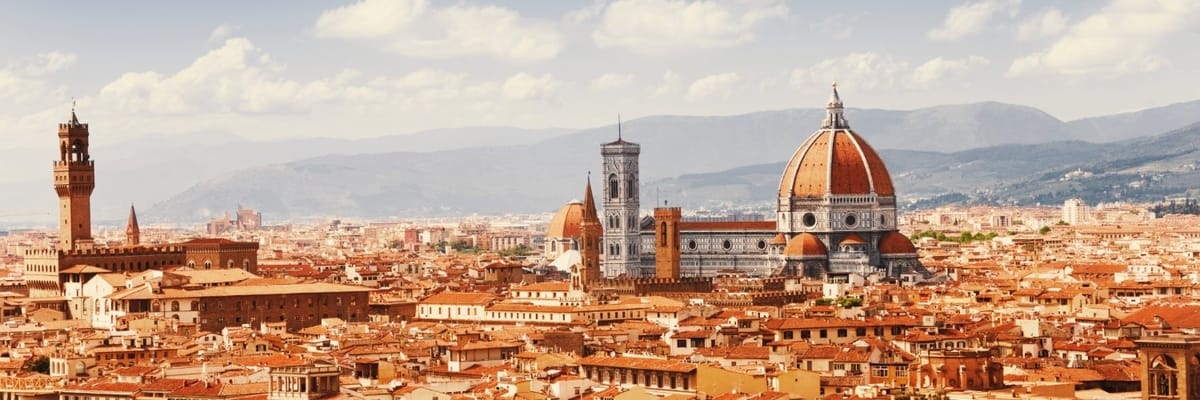
From Piazzale Michelangelo, Florence stacks into a clean skyline of terracotta roofs with Brunelleschi’s dome as the focal point. Come near sunset to catch warm light sliding across the Arno and the city’s ochre tones. Use the stone balustrade to anchor a wide composition and add scale with people in the foreground. Stick to marked viewpoints for easy framing and comfortable footing in crowded moments. #SunsetHunting #ElevatedViews #PostcardEurope
Framed River Views from Ponte Vecchio
On Ponte Vecchio, the river corridor becomes your leading line, with shuttered shop fronts and hanging windows adding texture to the edges of the frame. Step to the middle and shoot along the Arno for symmetry, then turn outward for layers of bridges and pastel buildings. Early morning gives you cleaner lines before foot traffic fills the bridge. For extra depth, include the wooden storefronts as a natural frame. #LeadingLines #OldWorldCharm #ReflectionsEverywhere
Sunlit Arches & Statues at Loggia dei Lanzi
The open-air Loggia dei Lanzi in Piazza della Signoria is a masterclass in light and shadow. You can photograph marble figures against deep archways, then pivot for wide shots that include the square’s strong geometry. Late afternoon light rakes across the statues, bringing out carved details and contrast. Try a low angle to emphasize the vaulted ceiling and repeating columns. #ArchitecturalDetails #HeritageAngles #ShadowPlay
Geometric Marble Patterns on the Baptistery Doors
In front of the Baptistery of San Giovanni, the green-and-white marble panels read like graphic design when you crop tight. Move closer to isolate repeating shapes, gilded door reliefs and sharp lines that pop in soft morning light. A short lens or portrait mode works well for detail-focused shots without distracting backgrounds. Look for angles that keep verticals straight to highlight the structure’s symmetry. #SymmetryHunters #DetailShot #EuroArchitecture
Quiet Portrait Corners in the Oltrarno Streets
Across the river in Oltrarno, you’ll find narrow lanes with worn stone walls, artisan shop signs and small doorways that create naturally layered street scenes. Morning shade keeps colors muted and flattering for portraits, while midday sun can make bold lines and shadow blocks. Watch for scooters, bicycles and locals passing through to add motion to reels. Keep your framing tight to let textures and patina do the storytelling. #UrbanCharm #CandidFaces #EuropeanStreets
Golden Hour Silhouettes at Basilica di San Miniato al Monte
Just above Piazzale Michelangelo, San Miniato al Monte offers a calmer, higher perch with a strong foreground of Romanesque geometry. Aim for the façade’s patterns, then pull back to include the city beyond for layered depth. At golden hour, you can capture silhouettes on the steps and warm highlights on stone details. Stay within the terrace edges for clean compositions and safe spacing. #GoldenHourGlow #TimelessEurope #FramedByArchitecture
Library Symmetry at Biblioteca delle Oblate Terrace
The Biblioteca delle Oblate has a terrace view that lets you photograph the Duomo close-up with rooftops stepping toward it. It’s a great spot for clean skyline compositions, especially in softer light when contrast is gentle. Use railings and rooflines as guiding lines, or switch to vertical framing for dome-and-sky balance. It’s also ideal for capturing a quieter city mood without street-level crowds. #RooftopViews #SoftLightScenes #JourneyInFrames
Blue Hour Layers from Ponte Santa Trinita
Ponte Santa Trinita is a favorite for photographing Ponte Vecchio downriver, with elegant arches creating a smooth foreground curve. Arrive at blue hour when streetlights start to glow and reflections stretch across the water. A steady hand or tripod helps if you want a longer exposure to soften the Arno’s surface. Frame the shot slightly off-center for depth, letting the bridge line guide the eye into the scene. #BlueHourMagic #LongExposureShots #WaterScapes
Fly with Condor to Florence
5 Reasons Why You Should Travel to Florence
Instagrammable Spots in Florence
Fly with Condor to Florence
+
5 Reasons Why You Should Travel to Florence
+
Instagrammable Spots in Florence
+
Fly with Condor to Florence (FLR)
Florence is a city in central Italy, set on the Arno River in the Tuscany region. It is widely associated with Renaissance-era art, architecture and urban culture that shaped European cultural history. Summers are typically hot while spring and fall bring milder conditions that suit city sightseeing. The surrounding hills and river valley shape Florence’s compact historic center and its wider urban area.
☀️ Best time to go: April–June and September–October, mild temperatures and generally lower heat than midsummer
🏛️ Best known for: Renaissance heritage, Art museums, Historic city center, Architecture, Tuscan cuisine
🗣️ Language: Italian
✈️ Airport: Florence Airport, Peretola (FLR)
5 Reasons Why You Should Travel to Florence (FLR)
1. Renaissance art in churches and galleries
Gold-lit chapels, frescoed cloisters and marble naves turn everyday walks into a crash course in Renaissance art. From the Uffizi to the Accademia, masterpieces sit close together, so you can balance big-ticket viewing with quiet corners.
2. Streetscapes carved by the Arno River
Stone bridges and riverfront promenades frame Florence from dawn haze to evening lights. Cross toward the Oltrarno for workshop lanes and small piazzas, then climb to Piazzale Michelangelo for skyline views and sunset photo light.
3. Tuscan flavors rooted in simple ingredients
Evenings smell of grilled bistecca and peppery olive oil poured over ribollita. Browse Mercato Centrale or Sant’Ambrogio for seasonal produce and cheeses, then order lampredotto or a schiacciata sandwich for a classic street-food bite.
4. Oltrarno craft traditions in working studios
Handmade leather, paper marbling and goldsmith work still shape daily life in the Oltrarno. Step into small botteghe to watch techniques up close and ask before photographing. You’ll find souvenirs with real provenance, not mass production.
5. Day trips to hill towns and vineyard roads
Beyond the city, cypress-lined roads lead to Chianti vineyards and medieval hill towns. Siena and San Gimignano are popular outings, often reached by bus or guided tour. If you visit wineries, arrange transport in advance and taste responsibly.
Instagrammable Spots in Florence (FLR)
Terracotta skyline layers from Piazzale Michelangelo
Warm terracotta rooftops stack up toward Brunelleschi’s dome from this broad hillside terrace above the Arno. The view reads clearly even in a quick scroll: river curve below, compact city grid in the middle, soft Tuscan hills behind. Late afternoon light brings out the copper and clay tones in the roofscape while street musicians often add a subtle sense of place. After dark, the same panorama turns into a calm field of amber city lights. #GoldenHourGlow #SkylineViews #EuroWanderlust
Quiet Romanesque geometry at San Miniato al Monte
Striped marble, a crisp façade and mosaic details give this hilltop basilica a clean, graphic look that feels made for minimal compositions. From the forecourt, Florence spreads out below with more breathing room than the nearby terrace, so your city backdrop stays uncluttered. The atmosphere shifts noticeably around sunset as the hillside cools and the skyline turns softer. Photography rules can vary by area, so follow current signage and staff guidance and focus on exterior architecture if needed. #SymmetryHunters #HeritageAngles #TimelessEurope
Wisteria tunnel and stairway views in Bardini Gardens
A violet wisteria pergola creates a natural ceiling of color that frames portraits and slow, cinematic walk-through clips. Beyond the tunnel, stone steps and terraces open onto postcard views of Florence’s rooftops, mixing garden texture with city skyline in a single frame. The wisteria bloom is seasonal and typically peaks in late April to early May, but the garden stays photogenic year-round with layered greenery and warm stone. You’ll find plenty of quiet corners where the city feels far away, even though you’re still in the center. #ColorPlayVibes #HiddenCourtyards #EuropeAesthetic
Arno reflections of Ponte Vecchio from Ponte Santa Trinita
From this Renaissance bridge, you get the classic river angle where Ponte Vecchio sits centered over the Arno like a stage set. Early morning often brings calmer water, so the bridge and its rows of shop windows double into soft reflections. At twilight, the river picks up bands of blue and gold as lights switch on along the embankments. The view works especially well in vertical framing because the arches, river and skyline stack neatly in one shot. #ReflectionsEverywhere #OldWorldCharm #JourneyInFrames
Stone arches and river curve on the Vasari Corridor side
Along the Lungarno near Ponte Vecchio, the river-facing arches and pale stone walls create repeating patterns that feel distinctly Florentine. As you walk, glimpses of the bridge appear and disappear, giving your photos a sense of movement without needing props or poses. The light is especially flattering when it’s low enough to skim the stone and pull out texture in the masonry. It’s a strong spot for detail-forward shots that still keep the city’s iconic silhouette in the background. #ArchitecturalDetails #LinesAndShadows #PostcardEurope
Iron-and-glass symmetry inside Mercato Centrale
Nineteenth-century iron beams, glass panels and long interior sightlines turn this market hall into an architectural photo set. The repeating structure gives you clean symmetry from multiple angles, especially when the central aisles briefly clear. Color comes from stacked produce, hanging signs and the warm glow of food counters, making it easy to capture Florence’s everyday energy. Aim for a mix of wide frames that show the roof trusses and tight shots that focus on textures and patterns. #StreetFoodScenes #PatternPerspective #EuropeanStreets
Dragon fountain steps at Orti del Parnaso overlook
A sculptural “dragon” fountain winds down the steps here, adding a playful focal point to an otherwise calm hillside viewpoint. From the benches, you can frame Florence’s landmark silhouettes from a less expected angle, with greenery and stone textures in the foreground. The atmosphere feels local and unhurried, which makes candid travel shots look more natural than staged. This is one of the best options when you want open sky and city views without the Piazzale crowd. #ChasingViews #MoodyFrames #HiddenGemsEurope