Fly with Condor to Nairobi
5 Reasons Why You Should Travel to Nairobi
Instagrammable Spots in Nairobi
Fly with Condor to Nairobi
+
5 Reasons Why You Should Travel to Nairobi
+
Instagrammable Spots in Nairobi
+
Fly with Condor to Nairobi (NBO)
Nairobi is Kenya’s capital city in the country’s south-central highlands of East Africa. Set at high elevation, the city has a generally mild climate year-round, with wetter periods typically from March to May and again from October to December. Nairobi is a major center for business, education and culture in Kenya and sits close to open savanna landscapes at the southern edge of the metropolitan area. The city’s growth began as a late-19th-century rail depot and it later developed into a large, multi-ethnic urban area.
☀️ Best time to go: June–October and January–February, generally drier conditions with cooler or warmer temperatures depending on the season
🏛️ Best known for: City life, Wildlife experiences, Kenyan culture, Regional business, Food markets
🗣️ Language: English and Swahili are the principal languages encountered locally.
✈️ Airport: Jomo Kenyatta International Airport (NBO)
5 Reasons Why You Should Travel to Nairobi (NBO)
1. Big-city days with safari close at hand
Morning light can find you on a game drive in Nairobi National Park, then back in the city for lunch. With rangers and guides, you can spot rhino, giraffe and more nearby. Stay in marked areas and follow instructions.
2. Wildlife conservation with close encounters
In the Karen area, conservation stories come alive at the David Sheldrick Wildlife Trust and the Giraffe Centre. Timed visits help protect animals while you learn what’s involved in care and habitat work. Book slots ahead when required.
3. Museums, markets and living culture scenes
Gallery rooms and performance stages add depth beyond the skyline. The Nairobi National Museum and Bomas of Kenya introduce art, music and heritage in clear context. Pair them with a local-led walk near the CBD for street-level detail.
4. Food traditions from grills to city cafés
Charcoal grills scent the evening as nyama choma hits the table with kachumbari and ugali. Add sukuma wiki and stews at everyday spots, then switch to cafés in Westlands. Go where food is freshly cooked and busy.
5. Green escapes on the city’s outer edges
Leafy neighborhoods lead to short nature breaks without leaving Nairobi far behind. Walk the Oloolua Nature Trail near Karen, or plan a calm afternoon among gardens and craft workshops. Keep to marked paths and bring sun and rain cover.
Instagrammable Spots in Nairobi (NBO)
360-degree skyline frames from the KICC rooftop
High above the city center, the KICC rooftop opens Nairobi in every direction, from dense CBD blocks to greener edges beyond. The scene is all geometry: gridded streets, sharp tower silhouettes and shifting cloud shadows that add depth to wide city shots. Late-day light often turns glass and concrete into warm gradients, while hazier afternoons create a softer, layered skyline. #SkylineViews #ChasingLight #AfricaAesthetic
Wildlife-meets-city scenes in Nairobi National Park
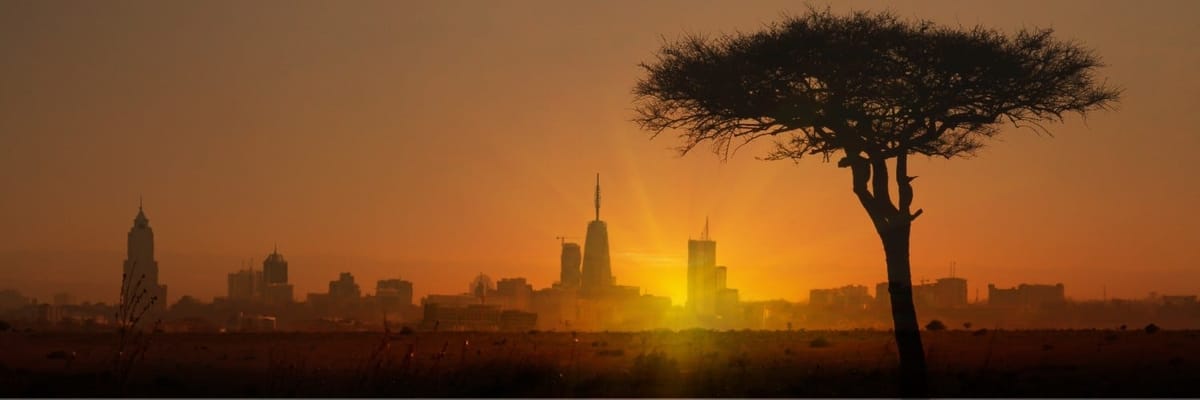
A line of acacia trees and open savanna sits improbably close to the skyline, giving you a Nairobi-only contrast of wild foregrounds and urban backdrops. Dusty tracks, termite mounds and wide skies create clean, minimal compositions that make animals stand out. Early morning can feel especially cinematic, with softer tones and long shadows across the grassland. #IntoTheWild #SilhouetteShot #WildlifeWhispers
Waterfall and forest greens in Karura Forest
Dense, leafy canopy and winding paths give Karura a cool, shaded palette that reads beautifully in photos, especially after rain when greens deepen. The small waterfall is a natural focal point, with textured rock and moving water that brings energy to short clips. Look for frames where tree trunks and hanging branches create a natural border around the scene. #NatureTextures #MoodyFrames #SoulOfAfrica
Palm-lined symmetry at the United Nations Office at Nairobi
Tall palms, clipped lawns and bright, open walkways give the UN complex a polished, graphic look with strong lines and repeating patterns. The contrast between deep green landscaping and pale pathways helps portraits pop without feeling busy. Access can be controlled for security reasons, so follow current visitor procedures and on-site guidance. #SymmetryHunters #ArchitecturalDetails #RefinedAesthetic
Color and pattern close-ups at Maasai Market
Rows of beaded jewelry, woven baskets and bold textiles create a punchy mosaic of color that’s ideal for detail-led shots. The best frames come from focusing on repeating patterns, stacked bangles and the hands of artisans arranging their displays. Movement and chatter add a lively street-scene atmosphere, making it easy to capture stories that feel distinctly Nairobi. #ColorPlayVibes #DetailShot #ColorsOfAfrica
Heritage lines and vintage steel at the Nairobi Railway Museum
Old locomotives, riveted metal and worn paintwork give this museum a textured, timeworn look that reads like a period film set. You’ll find strong graphic elements in the wheels, pistons and carriage corridors, perfect for bold black-and-white edits. The mix of industrial shapes and faded signage delivers a distinctive Nairobi history frame in a compact space. #TimelessPlaces #UrbanTextures #CinematicTones
Sculpture-and-lake compositions at Uhuru Park
Open water, footbridges and monuments create clean foreground-to-background layers that work well for wide shots and slow, sweeping video. On calm days, the lake surface turns into a soft mirror, doubling trees and skyline fragments into gentle reflections. The park’s broad lawns and pathways also make it easy to capture local-life moments without forcing the scene. #ReflectionsEverywhere #LocalLife #GoldenAfricaGlow