Mobility aids
You can take two mobility aids, such as a wheelchair, walker or crutches, with you on your flight free of charge. Please register walking aids at least 48 hours before your scheduled departure.
You can take two mobility aids, such as a wheelchair, walker or crutches, with you on your flight free of charge. Please register walking aids at least 48 hours before your scheduled departure.
If you need mobility aids such as a wheelchair, walker or crutches, we’re happy to help: You can take up to two mobility aids with you on your flight free of charge. Depending on whether you want to take a manual or battery-powered wheelchair or another mobility aid with you, there are different requirements you need to bear in mind. More information can be found further down the page.
The following applies to all mobility aids: Please register your mobility aid with us as early as possible, but at least 48 hours before departure. Transportation will be automatically booked for your return flight, to ensure that we are optimally prepared for your journey. You don’t need to register walking sticks or crutches beforehand.
After we review your registration, you’ll receive written confirmation from us regarding your booking of mobility aids.
If possible, you’ll receive your mobility aid right at the aircraft after landing, immediately after disembarking. Unfortunately, we cannot offer this service at all airports. If you don’t get your mobility aid right after disembarking, you can pick it up at the oversized baggage carousel in the baggage claim area.
If your wheelchair or other mobility aid – and, where applicable, the associated batteries – cannot be prepared and loaded safely in accordance with the applicable requirements, we reserve the right to refuse carriage.
Possible reasons for this could include:
Our aircraft fleet consists of different types of aircraft. Since there can always be last-minute changes, we can't guarantee that you'll fly with the same aircraft as specified at the time of booking.
The following dimensions can be loaded on all Condor aircraft:
On flights with the Embraer E190 aircraft type, which is used by some of our partner airlines, the following different maximum dimensions apply due to the smaller cargo holds: 120 × 100 × 80 cm (L × W × H).
Are you travelling with crutches or a walker, or are you taking your manual or battery-powered wheelchair, including the battery, on your trip?
Different requirements apply for registration and transport depending on the type.
Please measure and weigh your manual or battery-powered wheelchair. We need to know the dimensions (length × width × height) and the weight in kilograms.
If you want to bring a battery-powered wheelchair or another mobility aid with you, please check the battery type, the number of propulsion and spare batteries, and whether the batteries are removable or permanently installed. For lithium batteries, you will also need to specify the nominal energy of each battery in Wh. Battery-powered mobility aids are considered dangerous goods, so you must adhere to the applicable battery limits. More information can be found further down the page.
Please register your mobility aid with us as early as possible, but at least 48 hours before departure. You can take walking sticks and crutches on board without having to register.
To register your manual wheelchair, you just need to fill out and submit the online form.
To register your battery-powered wheelchair, you also need to download a second form, fill it out and email it together with the required documents to specialassistance@condor.com. We recommend that you carry copies of this form and the other documents with you during your trip.
After reviewing the form and the submitted documents, you’ll receive a written response from us. If we have any questions, we’ll raise them directly with you.
Please arrive at the airport at least two hours before departure for short-haul flights and at least three hours before departure for long-haul flights.
If special manufacturer instructions or tools are required to prepare your mobility aid for transport, please bring them with you.
Our ground staff will be happy to assist you with check-in. They will also verify the registered transport requirements for battery-powered mobility aids in the process.
Below you’ll find the requirements for transporting your battery-powered mobility aid safely, depending on the battery type.
Different rules apply to lithium batteries depending on whether the battery can be removed from your mobility aid or is built-in and non-removable.
Removable lithium batteries
If your mobility aid is specifically designed for the battery to be removed by the user, the battery must be removed from the mobility aid in accordance with the manufacturer’s instructions.
Batteries removed from the mobility aid must be transported in the cabin and individually protected against damage, for example in a battery bag, and secured against short circuits. For older batteries with open terminals, you may need to insulate the battery terminals – for example with electrical insulating tape. This also applies to spare batteries.
The following applies to the drive batteries:
In addition, you can take spare batteries in the same quantity and with the same rated energy in the cabin. As such, removed batteries and spare batteries must not exceed the following maximum limits in total:
Built-in lithium batteries (non-removable)
For flight safety reasons, stricter requirements apply to mobility aids with permanently installed lithium batteries on all Condor flights for new bookings from October 1, 2026. Bookings confirmed before this date may still be used based on the battery limits applicable at the time of booking. A final check for this will take place at the airport on the day of departure.
If lithium batteries are permanently installed in your mobility aid and cannot be removed, they remain in the mobility aid during transport. The batteries must be securely attached and adequately protected from damage by the design of the mobility aid.
Your mobility aid must be transported completely switched off and set up so that it does not accidentally turn on during the flight. To do this, the electrical circuits must be disconnected in accordance with the manufacturer’s instructions. Some models can be turned off with a key, or they may have a switch, button, lever or a special flight mode. In addition, the battery terminals must be protected against short circuits, for example if the batteries are encased in a housing and firmly seated in the mobility aid.
The following applies to built-in drive batteries:
Additionally, you can take into the cabin:
Specification of nominal energy
The nominal energy for lithium-ion batteries is stated in watt hours (Wh). For newer lithium-ion batteries, you can usually find this information on the battery. If your battery does not display this information, you can calculate it as follows:
These include:
The batteries can remain in your mobility aid if they are securely attached and adequately protected from damage by the design of the mobility aid. They can also be removed according to the manufacturer’s instructions if the mobility aid is expressly designed for this and the batteries are not damaged or impaired by removal.
With built-in batteries, your mobility aid must be transported completely switched off and set up in such a way that it cannot accidentally turn on during the flight. To do this, the electrical circuits must be disconnected in accordance with the manufacturer’s instructions. Some models can be turned off with a key, or they may have a switch, button, lever or a special flight mode. In addition, the battery terminals must be protected against short circuits, for example if the batteries are encased in a housing and firmly seated in the mobility aid.
Depending on the battery, you can take a maximum of the following spare batteries:
You must transport the batteries and spare batteries separately from the mobility aid in sturdy, rigid outer packaging in or as checked baggage. Suitable options include containers made of rigid plastic, fiberboard, wood or metal. Unfortunately, Condor cannot provide you with suitable outer packaging.
For flight safety reasons, you may only transport mobility aids with non-leak-proof (wet) batteries if your mobility aid can be loaded, stowed, secured and unloaded upright throughout transportation.
If your mobility aid can be loaded, stowed, secured and unloaded upright throughout your journey, the batteries can remain in the mobility aid. They must be securely fastened and adequately protected from damage by the design of the mobility aid.
Your mobility aid must be transported completely switched off and set up so that it does not accidentally turn on during the flight. To do this, the electrical circuits must be disconnected in accordance with the manufacturer’s instructions. Some models can be turned off with a key, or they may have a switch, button, lever or a special flight mode. In addition, the battery terminals must be protected against short circuits, for example if the batteries are encased in a housing and firmly seated in the mobility aid.
The batteries must, where possible, be fitted with leak-proof sealing caps. Spare batteries are not permitted.
If your mobility aid cannot be kept upright at all times during transportation or does not adequately protect the battery from damage, then the batteries must be removed from the mobility aid. For flight safety reasons, we cannot transport non-leak-proof batteries that have been removed from the mobility aid. They can only be transported as cargo via a freight forwarder approved for dangerous goods.
You can then transport your mobility aid without a battery as regular checked baggage.
Yes, all of our aircraft have a wheelchair. Our crew will be happy to help you on your way to the on-board toilet. However, our flight attendants cannot carry or lift you. If you require additional assistance, please travel with a companion.
We offer various wheelchair services for a comfortable and stress-free journey.
You can choose from the following options:
It depends on which type of special assistance you choose.
We offer three different options: wheelchair service to the boarding gate, to the aircraft door or to your seat on the plane. You can also reserve a wheelchair for on board. Please register for each service at least 48 hours before your flight. You can find more information and the registration form on our page on accessible travel.
No, each companion needs a valid flight ticket.
We will make sure you can sit next to your companion. If you need more than one person to support you, our service team will help you find the best solution.
Yes, online check-in is available to all passengers. If you need special assistance, then please contact the Special Assistance Team.
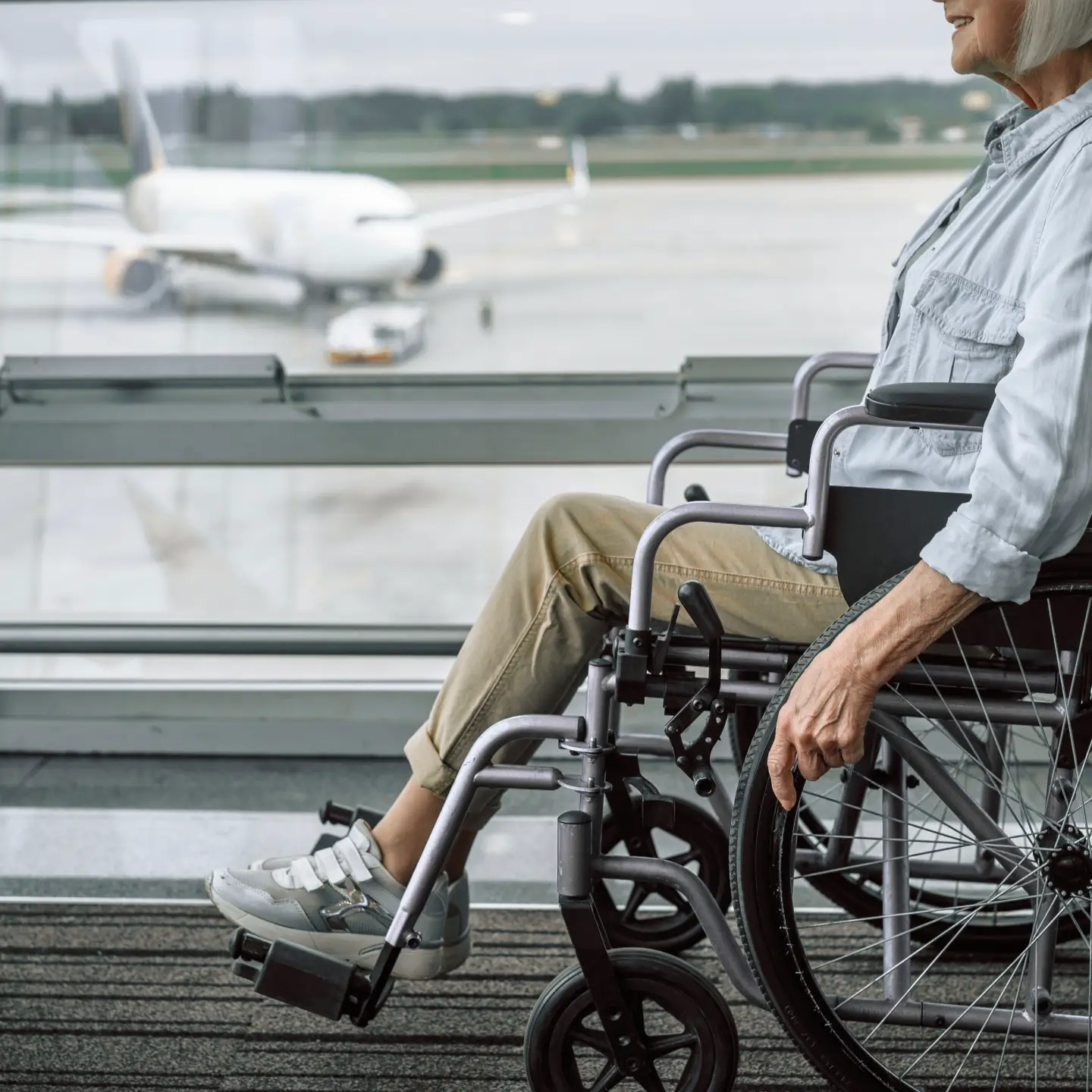
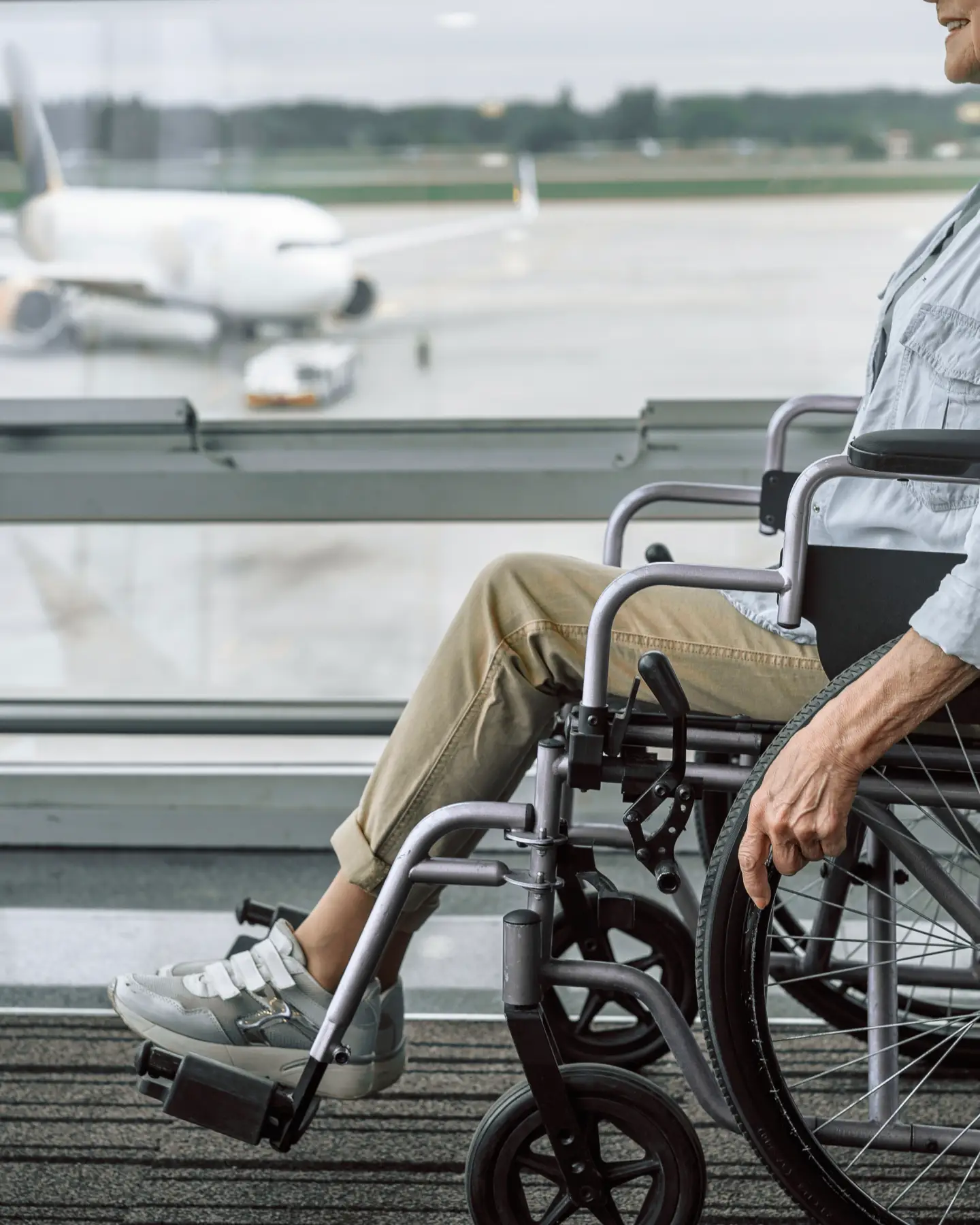
We transport up to two manually operated mobility aids, such as a manually operated wheelchair, rollator or crutches, free of charge.
Walking sticks and crutches are not considered carry-on baggage. You can therefore take them on board in addition to the permitted carry-on baggage. You do not need to register these walking aids in advance.
To register your manual wheelchair, please have the following information ready:
Register your wheelchair online in advance.
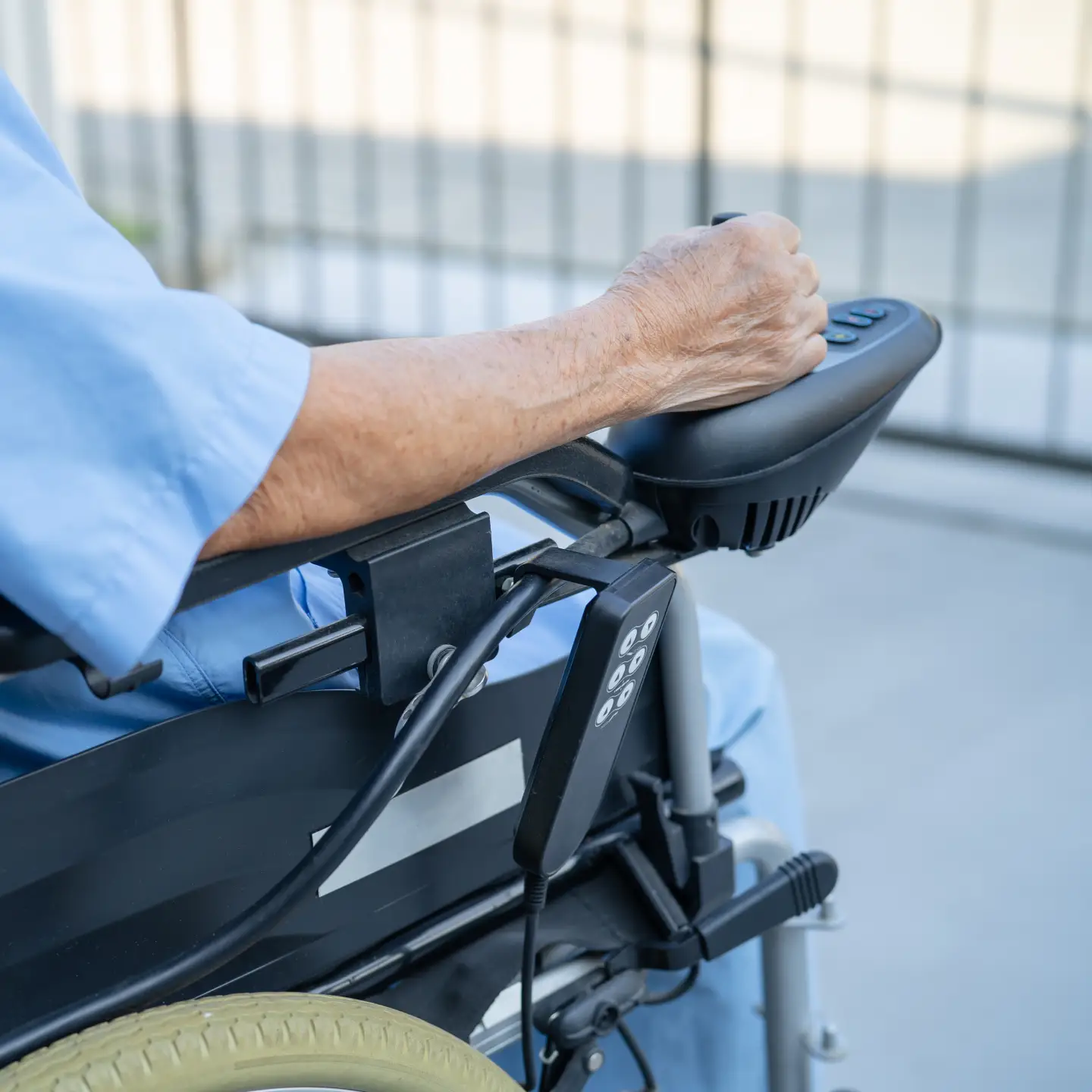
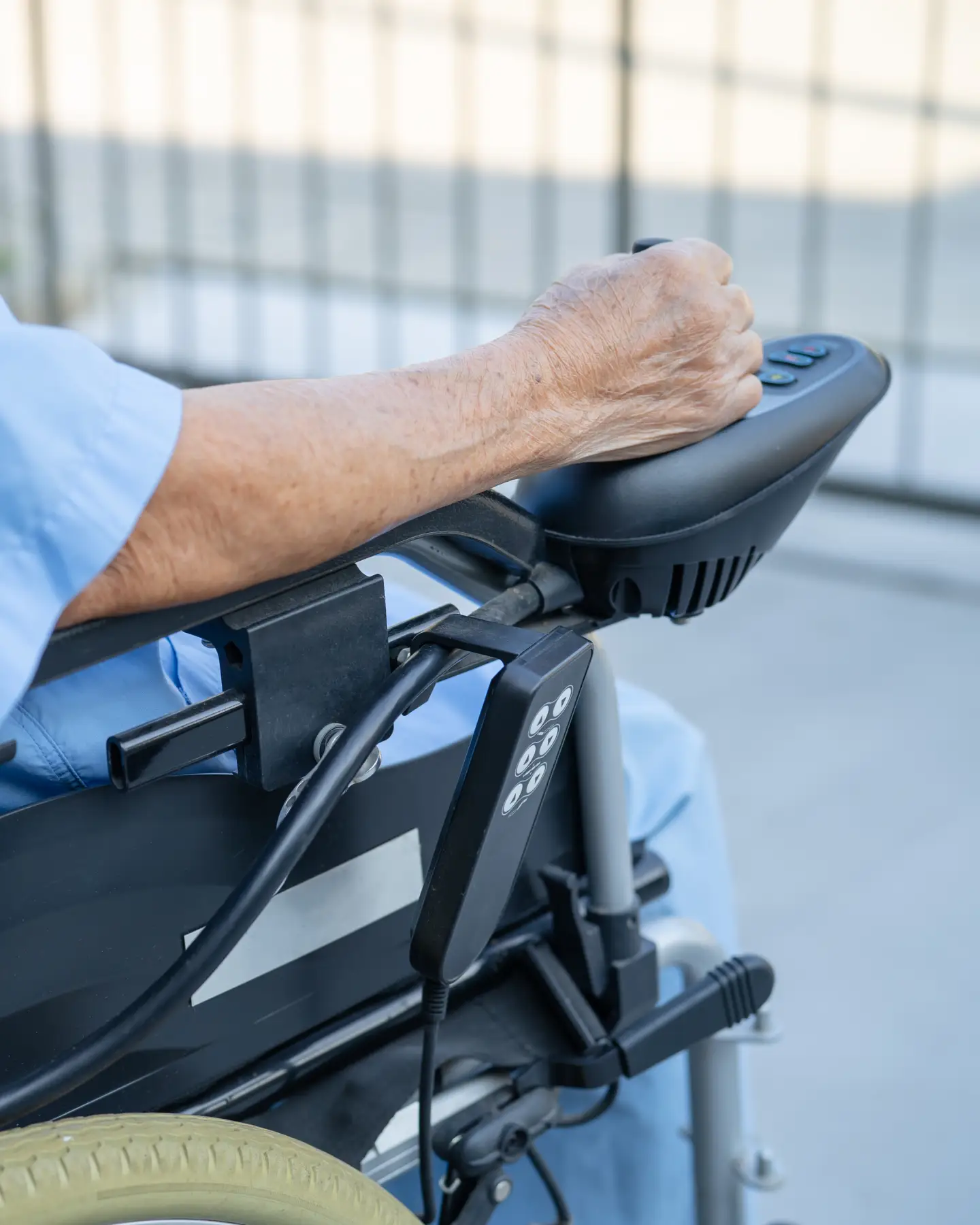
Of course, you can also bring a battery-powered wheelchair or another mobility aid with you. However, there are a few additional transport requirements to consider. As the batteries in battery-powered mobility aids are classified as dangerous goods, we, as the airline, are required to inspect them in advance. This enables us to ensure that they can be transported on the plane.
The specific requirements that apply depend on the battery type and, in individual cases, on whether the battery is removable or built-in. Please also always follow the manufacturer’s instructions for your mobility aid. Further information on the transport requirements for batteries can be found further down this page.
To register, we need two forms:
Manufacturer specifications, manufacturer confirmation or test summary (alternatively: safety data sheet) for the battery
Photo of the battery or all batteries with clearly legible details on the battery type and, for lithium batteries, the nominal energy in Wh
Instructions for preparing the mobility aid for transport and removing the battery, if applicable
Please have the following information ready for registration:
lithium battery (removable or built-in)
leak-proof battery, dry cell battery
non-leak-proof (wet cell) battery