Fly with Condor to Oslo
5 Reasons Why You Should Travel to Oslo
Instagrammable Spots in Oslo
Fly with Condor to Oslo
+
5 Reasons Why You Should Travel to Oslo
+
Instagrammable Spots in Oslo
+
Fly with Condor to Oslo (OSL)
Oslo is Norway’s capital city, set at the northern end of the Oslofjord in southeastern Norway. The city combines a dense waterfront center with large forested areas inside the municipal boundary, including the Nordmarka region. Oslo has a humid continental climate, with cold winters and mild to warm summers and the longest daylight hours in late spring and summer. It is the country’s main cultural and economic center, with national institutions and a large share of Norway’s population in the surrounding urban area.
☀️ Best time to go: May–September, longer daylight hours and milder temperatures for urban travel and time outdoors
🏛️ Best known for: Scandinavian design, Museums, Waterfront districts, Nordic cuisine, Outdoor recreation
🗣️ Language: Norwegian; English widely used
✈️ Airport: Oslo Airport, Gardermoen (OSL)
5 Reasons Why You Should Travel to Oslo (OSL)
1. Harborfront architecture meeting daily city life
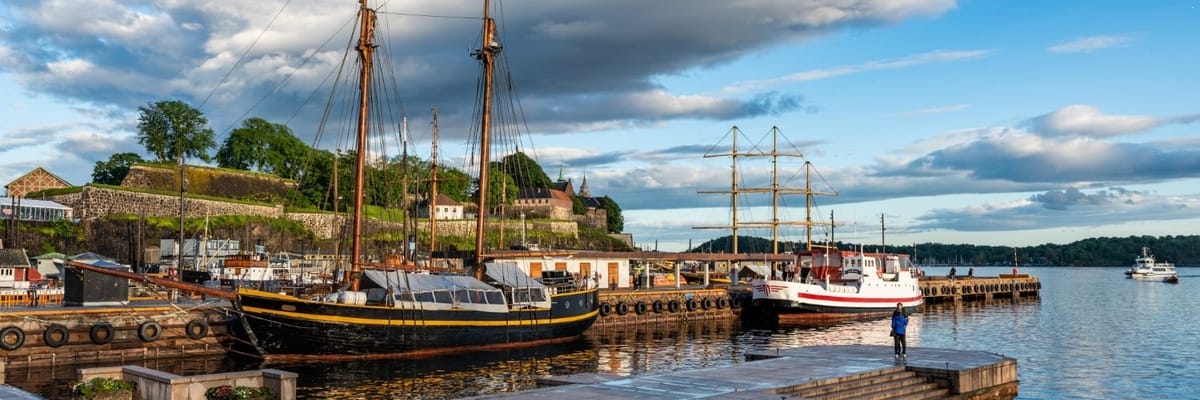
Along the Oslofjord, contemporary buildings sit right on the water. Walk the roofline of the Oslo Opera House, then continue to Aker Brygge for cafés and winter sun. Ferries and promenades keep the shoreline part of everyday Oslo.
2. Museums that trace Norway’s modern identity
In Oslo, art and history are part of the everyday conversation. See Edvard Munch’s work at MUNCH, then pair it with the National Museum’s broad collection. On Bygdøy, museum clusters add seafront views and quiet parks.
3. Fjord islands and forests minutes from streets
On bright summer days, the Oslofjord becomes the city’s backyard. Take a short ferry to Hovedøya or the other islands for swimming and picnics, and watch sea conditions. In colder months, marked trails in Nordmarka suit walks and skis.
4. Nordic flavors rooted in sea and seasons
Evenings often start with the sound of woks and charcoal grills at food halls. Taste Norwegian fiskesuppe or a seafood platter, then try brunost or rømmegrøt for a richer note. Seasonal menus reflect wild berries, dairy and coastal catch.
5. Neighborhoods mixing design, parks and saunas
Wood-fired saunas and cold dips are a visible Oslo tradition by the fjord. Wander through Frogner Park to see Vigeland’s sculpture setting, then head to Grünerløkka for small galleries and coffee bars. In religious spaces, keep a respectful tone.
Instagrammable Spots in Oslo (OSL)
Marble slopes and fjord lines at the Oslo Opera House
White marble surfaces tilt straight into the water, turning the building into a clean, graphic foreground for the fjord and skyline. As light shifts, the roof reads like a minimalist landscape with crisp edges, long shadows and bright highlights. You can frame boats, the harbor and the waterfront promenade from multiple levels without leaving the public exterior. On clear evenings, the pale stone takes on a soft glow that keeps portraits and cityscapes looking calm and modern. #ModernArchitecture #LinesAndShadows #EuropeAesthetic
Harbor reflections and sculpture moments at Aker Brygge
Glass façades, boardwalk lines and moored boats create a layered waterfront scene with constant motion. Polished surfaces and calm water often mirror the sky, giving you easy, changing reflections as you walk the promenade. Outdoor art and contemporary details add visual punctuation between café terraces and piers. Come when the light is lower to catch warmer tones bouncing off the buildings and the fjord. #UrbanReflections #WaterScapes #EuroWanderlust
Panoramic city layers from Ekebergparken’s scenic viewpoints
High above the center, Oslo spreads out in distinct layers: forested hills, the Barcode skyline and islands floating in the fjord. The viewpoints here make it simple to capture big, readable city scenes without losing a sense of Nordic nature at the edges. Sculptures tucked along the paths add unexpected shapes and textures if you want something more than a classic panorama. In winter, blue-hour light can turn the whole view cooler and more atmospheric. #ChasingViews #MoodySkies #PostcardEurope
Sculpture silhouettes along the main axis in Vigeland Park
Granite and bronze figures line wide paths, giving you repeating forms and strong scale cues in almost any direction. The Monolith area concentrates vertical shapes that photograph well even under flat light, especially when you include people for perspective. Nearby bridges and gateways add structure for cleaner compositions than a typical city park. Early in the day, the long shadows make the sculpture surfaces read with more depth and texture. #SculptureStories #ShadowPlay #TimelessEurope
Wooden-house streetscapes on Damstredet and Telthusbakken
Small, well-kept wooden houses from earlier centuries sit on a quiet slope, with painted façades, vines and garden details that feel distinctly local. The narrow street curve naturally creates a cozy, storybook perspective without needing a wide scene. You’ll find photogenic doorways, window frames and fences that work beautifully for close-ups and slow walking videos. Keep your shots respectful since these homes are inhabited and the area stays peaceful. #OldWorldCharm #DetailShot #HiddenGemsEurope
Waterfall energy and industrial textures on the Akerselva river walk
Along Akerselva, the city suddenly turns into rushing water, small bridges and pockets of green that look more like a forest corridor than an urban route. Around Grünerløkka, waterfalls and old industrial structures create a raw contrast of brick, steel and foam-white water. The sound and spray add atmosphere for short clips and candid street-meets-nature frames. After rainfall or snowmelt, the river can look especially dynamic, with stronger movement in the cascades. #NatureInFrames #UrbanTextures #ExploreToCreate
Angular skylights and calm interiors at Deichman Bjørvika library
The library’s sharp geometry, large glass planes and bright open spaces give you clean lines that feel contemporary and distinctly Scandinavian. From certain angles, the façade stacks like folded paper, while interior levels create repeating patterns of stairs, railings and light wells. It’s a strong spot for symmetry-driven frames, especially when people move through the space as small, graphic elements. Photography rules can vary by area, so follow current signage and staff guidance. #SymmetryHunters #ArchitecturalDetails #EuropeanStreets