Fly with Condor to Colombo
5 Reasons Why You Should Travel to Colombo
Instagrammable Spots in Colombo
Fly with Condor to Colombo
+
5 Reasons Why You Should Travel to Colombo
+
Instagrammable Spots in Colombo
+
Fly with Condor to Colombo (CMB)
Colombo is Sri Lanka’s largest city on the island’s west coast along the Indian Ocean. It is widely described as the country’s commercial center and is part of the wider urban area around Sri Jayawardenepura Kotte. Colombo’s cityscape includes coastal neighborhoods, canal networks and the man-made Beira Lake in the central area. The climate is tropical and humid with rainfall possible year-round, including wetter periods linked to the southwest monsoon.
☀️ Best time to go: December–March, typically drier conditions on the west coast and more stable weather for city travel
🏛️ Best known for: Colonial-era districts, Port city, Urban waterfronts, Sri Lankan cuisine, Markets
🗣️ Language: Sinhala and Tamil; English widely used
✈️ Airport: Bandaranaike International Colombo Airport (CMB)
5 Reasons Why You Should Travel to Colombo (CMB)
1. Oceanfront promenades with local snack stalls
As evening cools the air, Galle Face Green fills with kites and street-food smoke. Snack on kottu roti, isso wade or faluda as the Indian Ocean rolls in. Sea spray can be strong, so keep phones secure near the edge.
2. Trade streets where spices meet daily life
In Pettah, narrow lanes stack gold shops, fabric counters and fragrant spice stalls. You’ll hear bargaining beside temple bells and bus horns. Go in the morning, keep valuables close and ask before photographing people or shrines.
3. A city of shrines, lakeside calm, art
At Gangaramaya Temple, carved wood, bright murals and small museums show living Buddhist practice. Nearby, Seema Malaka sits on Beira Lake with quiet platforms and lanterns. Dress modestly and respect active places of worship.
4. Neighborhood cafés and Sri Lankan classics
Wok clatter and coconut aromas shape Colombo’s food scene from roadside kades to polished dining rooms. Order rice and curry with pol sambol, hoppers or lamprais baked in banana leaf. If you’re spice-sensitive, ask for it mild.
5. Green parks and museums with island context
Under rain trees at Viharamahadevi Park, you’ll see families strolling between ice-cream carts and shaded paths. Nearby, the National Museum adds context with royal regalia and historic art. Plan visits around heat and sudden showers.
Instagrammable Spots in Colombo (CMB)
Sunset lines along Galle Face Green
Sea breeze and wide-open sky make this oceanfront strip feel made for slow-motion clips and skyline frames. In late afternoon, the water shifts from steel blue to warm copper while food carts, kites and joggers add everyday movement. You can shoot long, clean horizons from the seawall then turn back for city silhouettes along Galle Road. It stays photogenic after dark too, when the promenade lights begin to glow. #SunsetHunting #SeasideSerenity #StoriesInMotion
Lotus Tower city grid from above
The lotus-shaped tower reads like a futuristic landmark, but the real visual payoff is the wide panorama across Colombo’s lakes, rooftops and coastline. From the public observation areas, the city feels like a map of geometry: straight avenues, curved shoreline and clusters of high-rises. Go when the light is changing and you’ll catch a soft gradient across the ocean side and the inland neighborhoods. After sunset, the skyline turns into a tight band of city glow. #CityFromAbove #ChasingLight #SkylineViews
Seema Malaka’s floating temple geometry on Beira Lake
Low pavilions and timber walkways sit right on the water, creating calm symmetry against the busy city backdrop. Gold accents, white railings and still lake surfaces give you clean lines for minimalist shots and quiet portraits. The surrounding lake adds space around the structures, so your frames feel uncluttered even in the center of town. Photography rules can vary by area, so follow current signage and staff guidance. #SymmetryHunters #UrbanReflections #SacredSpaces
The Red Mosque stripes in Pettah’s street scene
Candy-striped red-and-white arches and domes rise above one of the city’s most intense street backdrops. The contrast between the mosque’s graphic patterning and the tight market lanes makes every frame feel energetic and layered. You’ll get the strongest color when the sun is higher, while early morning tends to keep shadows softer in the streets. If you step inside, photography rules can vary, so check posted guidance and stay respectful around worshippers. #ColorPlayVibes #CulturalColors #DetailShot
Independence Memorial Hall’s stone colonnades and lion forms
Carved columns, repeated arches and wide steps give you a strong sense of rhythm without needing a crowd-free moment. Pale stone surfaces pick up gentle contrast on overcast days, while late light emphasizes shadows under the roofline. The space around the monument helps you compose clean, centered shots or frame details like the sculpted lions. It’s a calm place to capture a more formal side of the city’s architecture. #HeritageAngles #LinesAndShadows #TimelessPlaces
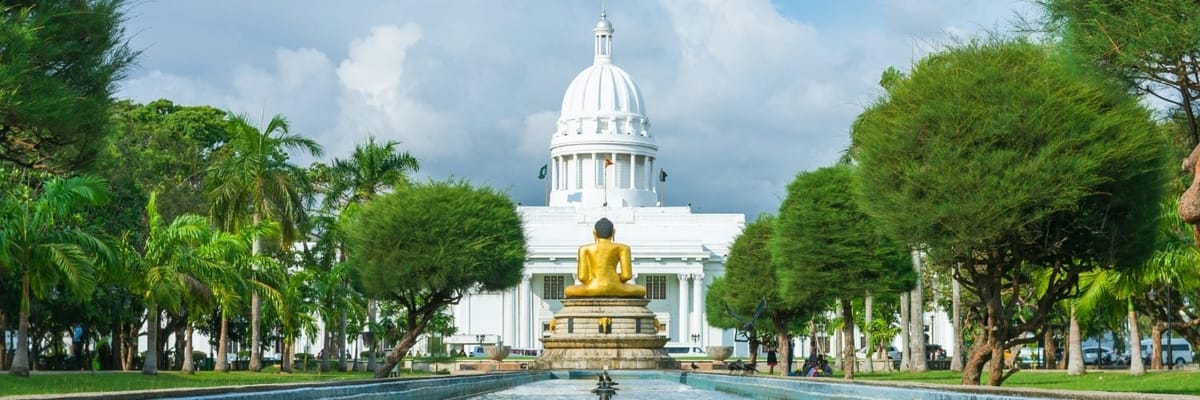
Town Hall framed by the lawns of Viharamahadevi Park
A bright-white, colonial-era facade rises beyond palm-lined paths, giving you a classic Colombo scene with lots of negative space. The park’s lawns, trees and fountains soften the geometry, so you can switch between wide establishing shots and close detail frames. Morning light keeps the whites crisp and the shadows clean, especially if you shoot from the park side facing the building. This is also a strong spot for slow, cinematic walk-through clips along the central paths. #ArchitecturalDetails #NatureInFrames #SoftLightScenes
Cargills Building’s red facade in the Fort district
Deep red walls, arched windows and crisp white trim make this historic department-store building a bold color anchor in the Fort area. The streets nearby add urban texture: crosswalks, passing buses and old-meets-new contrasts with modern towers in the distance. Overcast light works well here because it keeps the red tones saturated without harsh highlights. Focus on the corner angles to let the building’s curves and repetitive windows do the work. #UrbanCharm #UrbanTextures #PastAndPresent