Fly with Condor to Palermo
5 Reasons Why You Should Travel to Palermo
Instagrammable Spots in Palermo
Fly with Condor to Palermo
+
5 Reasons Why You Should Travel to Palermo
+
Instagrammable Spots in Palermo
+
Fly with Condor to Palermo (PMO)
Palermo is a coastal city in northwestern Sicily, Italy, set on the Tyrrhenian Sea between the Gulf of Palermo and nearby mountain ridges. As the regional capital, it is a major urban center with a long history shaped by Mediterranean trade and successive cultural influences. The city has a Mediterranean climate, with hot, dry summers and milder, wetter winters. Palermo’s built environment blends dense historic districts with modern expansion across the Conca d’Oro plain.
☀️ Best time to go: April–June and September–October, warm temperatures with lower summer heat and less peak-season crowding
🏛️ Best known for: Mediterranean cuisine, Historic architecture, Street markets, Coastal setting, City life
🗣️ Language: Italian
✈️ Airport: Falcone–Borsellino Airport (PMO)
5 Reasons Why You Should Travel to Palermo (PMO)
1. UNESCO mosaics and layered sacred spaces
Gold mosaics shimmer in the Palatine Chapel and nearby churches. Palermo’s Arab-Norman route links palaces, domes and cloisters that show how styles blended over centuries. Dress modestly and respect active worship.
2. Street markets with a citywide food ritual
At Ballarò and Vucciria, vendors call out over sizzling fryers. Order arancina, pane e panelle, sfincione and cannoli, each tied to local habits and ingredients. Go early for the fullest market rhythm.
3. A seafront city with beaches close by
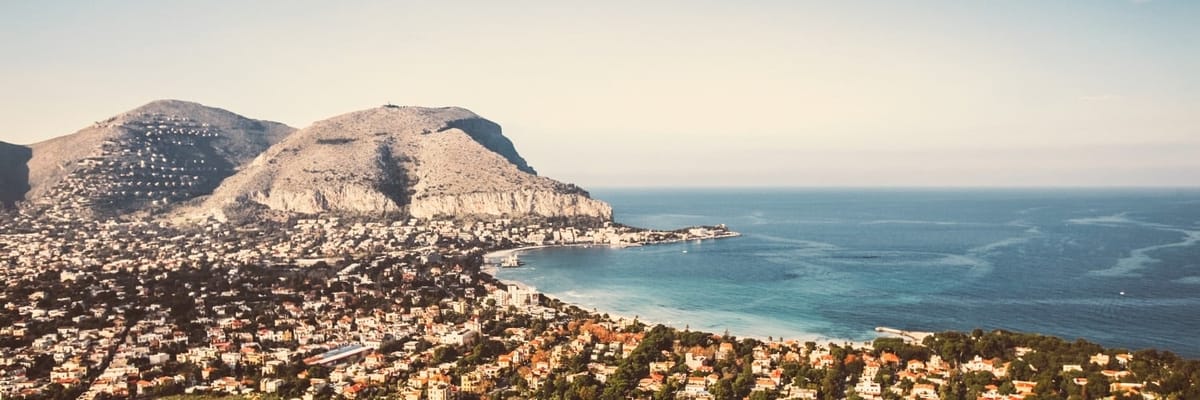
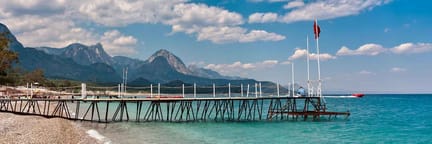
A short ride brings you from old streets to Mondello’s turquoise bay. The shoreline sits under Capo Gallo’s limestone headland, where access can depend on sea conditions. For cliff paths, stay on marked trails.
4. Neighborhood walks from baroque to art nouveau
In the historic center, baroque façades open onto small piazzas and courtyards. Along the waterfront and in Mondello, Liberty-style villas add early 20th-century flair. Plan time for slow, observant wandering.
5. Day trips to hill towns and cathedral views
Above the city, Monreale pairs a vast cathedral with panoramas over Palermo’s plain. Coastal Cefalù adds a compact old town and another cathedral on the same UNESCO listing. Travel times vary, so check routes ahead.
Instagrammable Spots in Palermo (PMO)
Baroque crossroads glow at Quattro Canti
Warm stone façades curve into a perfect urban stage where four ornate corners meet in symmetry. As sunlight moves across the statues and balconies, the intersection shifts from bright highlights to deep shadow bands. You can frame the scene straight-on for balance or step slightly aside to catch the street depth running toward the historic center. Early morning often feels calmer, letting the architecture, not the crowd, set the mood. #SymmetryHunters #HistoricCityVibes #LinesAndShadows
Rooftop perspectives from Palermo Cathedral
Pale limestone, tiled domes and layered rooftops create a textured map of the city when you look out from the cathedral’s upper levels. The view mixes close-up architectural details with distant hills, so your photos feel both intimate and expansive. Late-day light tends to bring out warmer tones in the stone and sharper relief in the carvings. If access routes or rules vary on the day, follow current signage and staff guidance. #CityFromAbove #ArchitecturalDetails #ChasingLight
Opera-house symmetry on Teatro Massimo’s steps
Broad stairways lead your eye toward a neoclassical façade that reads cleanly in photos, even from a simple front-on angle. The building’s pale stone and repeating columns create a crisp background for portraits and slow, cinematic street scenes. Around dusk, the contrast softens and the square takes on a polished glow. Nearby streets give you extra frames of city life to pair with the grand architecture. #UrbanPerspective #StreetGeometry #CinematicTravel
Market color layers at Ballarò
Shouts, stacked citrus, hanging lights and handwritten signs turn the market into a dense collage of color and motion. You’ll find photo moments in the small details: knives flashing at fish stalls, spice piles, glossy eggplants, cracked paint on shutters. Mid-morning light often filters into the lanes in uneven patches, adding natural spotlight effects. Keep your shots respectful and give vendors space when the aisles get tight. #ColorPlayVibes #LocalLife #DetailShot
Seafront promenade frames at Foro Italico
Open sky and a long waterfront line make this promenade ideal for clean compositions with lots of breathing room. With the sea on one side and the city’s edges on the other, you can capture silhouettes, kite shapes and shifting cloud textures. In calmer conditions, the water turns into a subtle mirror that adds softness to wide scenes. Sunset colors often linger here, especially when the horizon stays clear. #SeasideSerenity #PastelSkies #EndlessHorizon
Mosaic gold and red stone at Cappella Palatina
Gold mosaics, patterned floors and carved ceilings create an all-over visual tapestry with almost no blank space. The contrast between shimmering surfaces and dark stone arches gives your photos a rich, museum-like depth. Light changes through the day, so details can look matte one moment and luminous the next. Photography rules can vary by area, so follow current signage and staff guidance and avoid disturbing worshippers. #TimelessPlaces #VisualTextures #LightAndShadow
Bay-and-city panoramas from Monte Pellegrino
Rocky slopes and Mediterranean greenery open to sweeping views where the city meets the curve of the sea. The palette shifts fast here, from bright coastal blues to muted grays when clouds roll in, giving you both crisp and moody frames. You can spot the shoreline geometry and neighborhoods as layered shapes rather than a single skyline. Roads and paths can feel steep in sections, so stick to designated viewpoints for a steady, safe pause. #ChasingViews #MoodyFrames #EuroWanderlust