Fly with Condor to Cairo (CAI)
Cairo is Egypt’s capital and largest city, located on the Nile River in the country’s north near the Nile Delta. It forms part of a wider metropolitan area that extends toward Giza and serves as a major cultural and economic center for the region. Cairo has a hot desert climate, with very warm summers and milder conditions in winter. The city is a key gateway for domestic travel across Egypt, supported by extensive road, rail and air connections.
☀️ Best time to go: October–April, milder temperatures and lower humidity than the summer months
🏛️ Best known for: History, Museums, City life, Markets, Riverfront
🗣️ Language: Arabic
✈️ Airport: Cairo International Airport (CAI)
5 Reasons Why You Should Travel to Cairo (CAI)
1. Ancient monuments along the Nile corridor
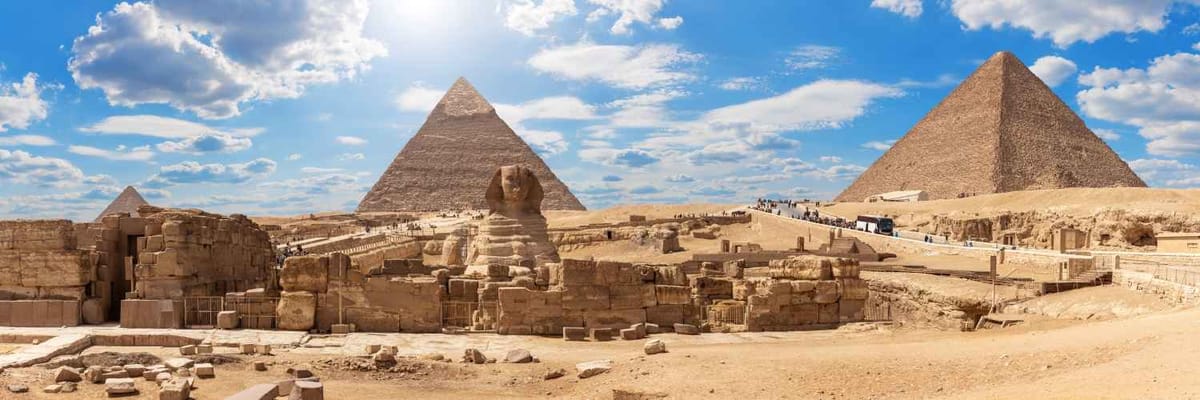
Cairo places you close to world-famous ancient sites tied to the Nile. Spend time at the Pyramids of Giza and the Sphinx then continue to Saqqara or Dahshur for a deeper look at early pyramid history.
2. Historic quarters shaped by Islamic architecture
Wander streets where minarets, courtyards and carved stone details frame daily life. In areas like Islamic Cairo you can visit Al-Azhar Mosque and the Citadel then pause in old lanes filled with workshops and cafés.
3. Markets and street life with local craftsmanship
Cairo’s bazaars give you a sensory mix of lanterns, spices and metalwork. Khan el-Khalili is the classic stop, but side streets also offer small ateliers and tea shops where you can watch bargaining and people-watching unfold.
4. Museum collections that span Egypt’s eras
The city’s museums help you connect artifacts to the places you see outside. Explore the Egyptian Museum in Tahrir Square then add the National Museum of Egyptian Civilization to trace stories from pharaohs to later periods.
5. A food scene from grills to sweet pastries
Eating in Cairo is part of understanding the city’s rhythm. Try koshari, ful medames and ta’ameya from casual spots then finish with kunafa or basbousa from neighborhood bakeries and dessert counters.
Instagrammable Spots in Cairo (CAI)
Sunrise Panorama from the Cairo Tower
From the top of Cairo Tower on Gezira Island, you can frame the city as it wakes up, with the Nile curving through the skyline. Early morning light softens the haze and turns concrete blocks into layered tones, ideal for wide-angle cityscapes. Use railings and window frames to add clean lines to your composition. On clear days, look for distant silhouettes toward Giza for a skyline-with-landmarks shot. #ElevatedViews #SkylineViews #GoldenAfricaGlow
Sphinx & Pyramid Alignment at the Giza Plateau
At Giza, the most compelling images come from playing with scale and alignment between the Sphinx and the pyramids. Move slowly along the viewing paths to find angles where the limestone textures read clearly and the background pyramids stack in clean layers. The warm stone tones work best in softer light, when shadows add depth to the carvings. Keep to marked areas for the best and safest framing angles in the sand and rock. #HistoricMood #TimelessPlaces #HeroPerspective
Mamluk Domes and Alleys on Al-Muizz Street
Al-Muizz Street in Islamic Cairo is a feast of arches, carved stone and repeating geometric patterns. You can shoot long perspectives down the lane for leading lines, then switch to close-ups of doors, mashrabiya-style woodwork and lantern details. Late afternoon brings richer contrast as light skims across the facades. Candid street scenes here add scale and a lived-in rhythm to your frames. #ArchitecturalDetails #StreetGeometry #SoulOfAfrica
Lamps, Spices, and Brass in Khan el-Khalili
Khan el-Khalili’s shopfronts glow with brass trays, hanging lanterns and saturated piles of spices. Aim for tight compositions that fill the frame with textures, then step back for bustling alley shots that capture movement and layered signage. Side light creates sparkle on metal and depth in the narrow lanes. Ask before photographing people up close so your portraits feel respectful and natural. #ColorPlayVibes #DetailShot #LocalLife
Reflections on the Nile at Qasr El Nil Bridge
Qasr El Nil Bridge gives you classic river-leading-lines with city silhouettes on both banks. Come at twilight when streetlights begin to glow and the water turns into a ribbon of reflections. A slower shutter helps smooth ripples and stretch light trails from passing boats. Frame with the bridge’s lamppost rhythm to keep the scene clean and graphic. #ReflectionsEverywhere #BlueHourMagic #LongExposureShots
Desert Ridges and City Edge at Wadi Degla Protectorate
At Wadi Degla, Cairo’s urban edge drops away into open desert ridges and wide, quiet valleys. The landscape photographs best when low sun pulls long shadows across the gravel and highlights the warm, dusty palette. Look for winding trails to create a strong visual path into your shot. Stick to marked routes so you can focus on composition while keeping your footing steady. #DesertDreamscape #WideOpenSpaces #ChasingLight
Geometric Calm in the Mosque of Ibn Tulun Courtyard
The Mosque of Ibn Tulun is made for symmetry lovers, with a broad courtyard, rhythmic arches and a minimal, sandy color palette. Straight-on compositions emphasize repeating lines, while angled shots reveal shadows that carve the space into graphic blocks. Mid-morning light often gives a balanced contrast without harsh glare. Keep your framing simple and let negative space do the work. #SymmetryHunters #LinesAndShadows #HeritageAngles
Historic Layers from Saladin Citadel Viewpoints
From the Citadel, you can capture Cairo as a layered city of domes, minarets and distant high-rises. Use telephoto framing to compress the skyline and make architectural details feel stacked and dense. Hazy conditions can actually help by creating softer depth between foreground and background. Golden hour adds warm highlights on stone and a calmer tone to the city below. #GoldenHourGlow #TelephotoPerspective #HistoricCityVibes